Journal / 06 July 2026
A better way to read vintage sizing
The number on an old label is a clue, not a conclusion. Measurements tell the useful story.
4 minute read
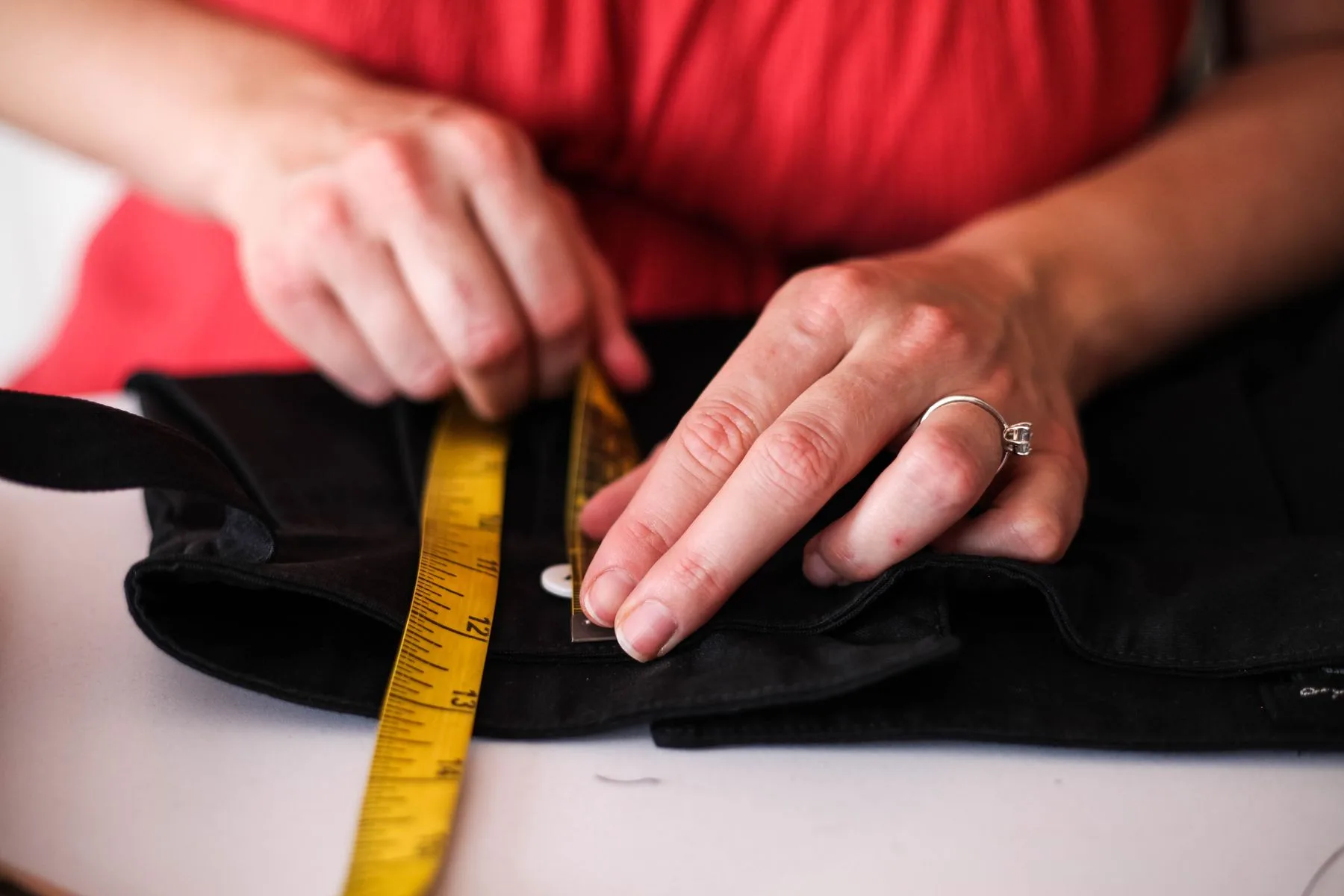
Start with the garment
Sizing systems have shifted across decades, makers and countries. A vintage size 12 may sit nowhere near a contemporary Australian size 12, so we begin with the garment itself.
For tops and dresses, compare bust, waist, shoulder and total length. For trousers and skirts, focus on the actual waistband, rise, hip and inseam.
Compare something you already wear
Lay a similar piece flat without stretching it and take the same measurements. This gives a more dependable comparison than measuring the body and adding an uncertain amount of ease.
A few centimetres can change the way a structured fabric sits. Knits and bias-cut garments deserve a little more flexibility.
Leave room for the life of the cloth
Older fibres can be strong, but they should not be placed under constant strain. If a piece closes only with effort, it is unlikely to feel good or wear well over time.